Sterling silver darkens over time, but it is one of the easiest metals to bring back. The right method depends on how tarnished the piece is and whether it has stones or a deliberately darkened finish. This guide takes you from the gentlest method to the strongest, then shows how to keep silver bright for longer.
Before you start: check what you are cleaning
Most mistakes happen when a method that suits plain silver is used on a stone or a finish that cannot take it. Two things to look for:
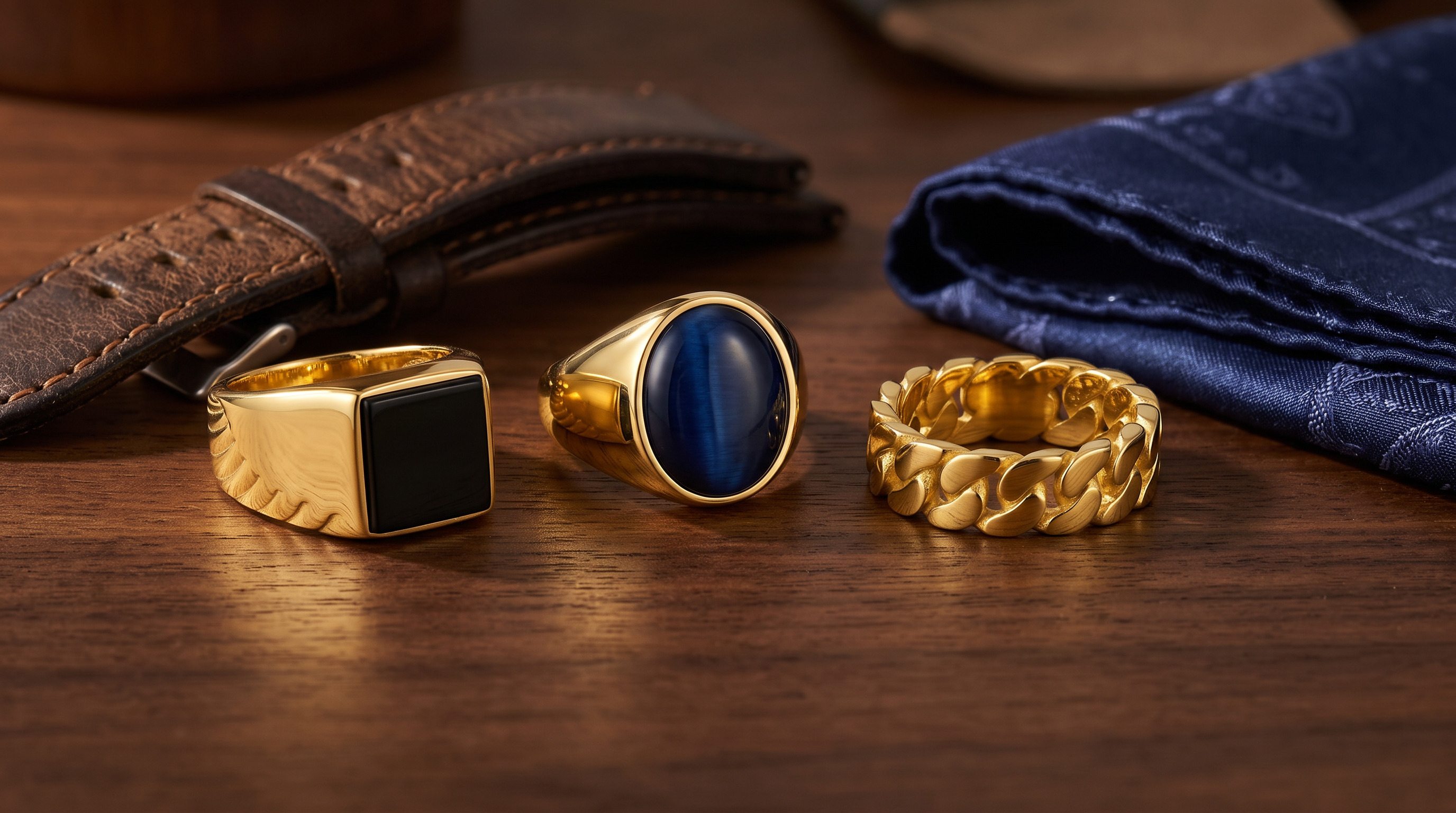
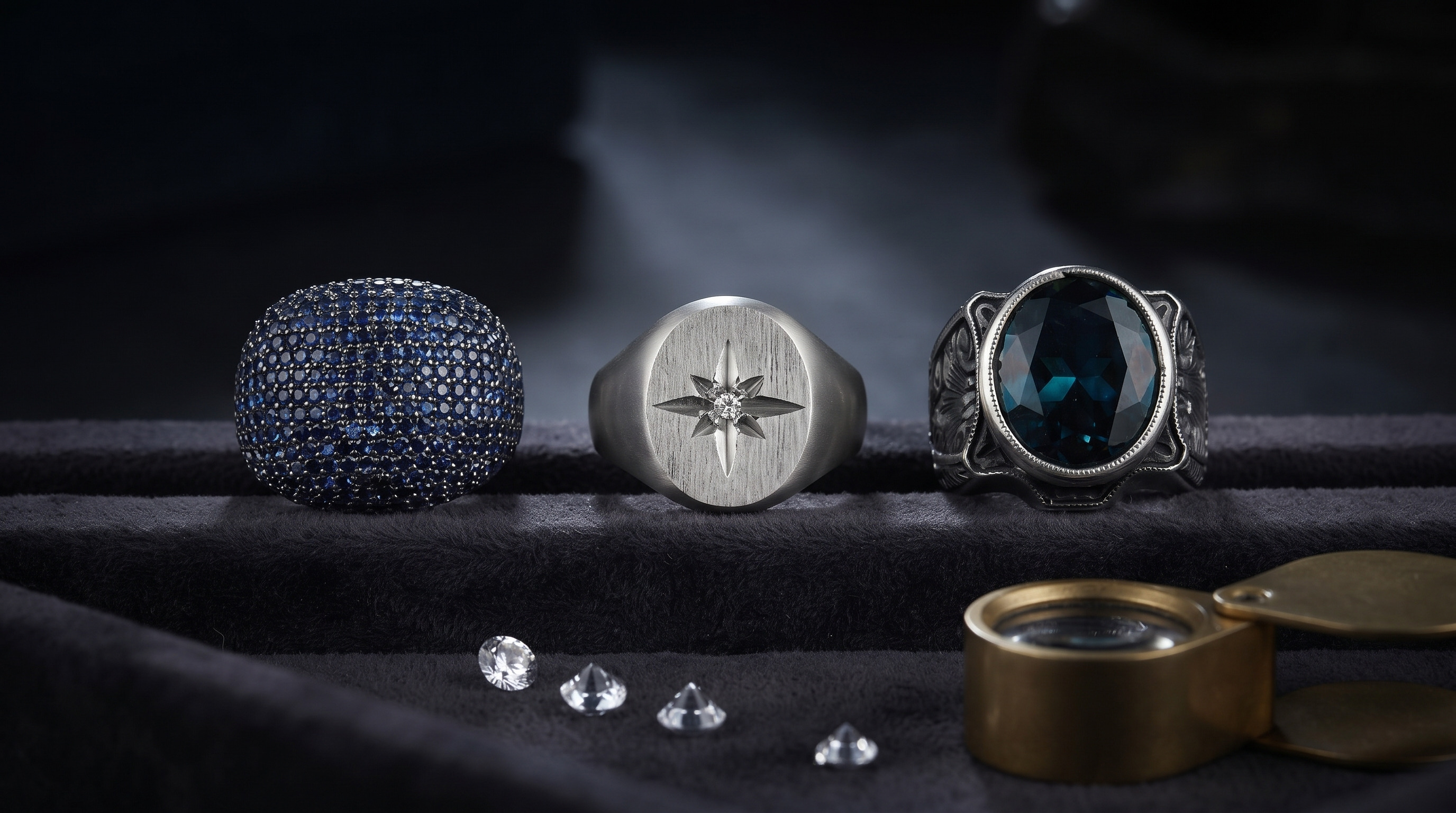
- Stones: soft and porous stones such as turquoise, lapis lazuli, malachite and mother of pearl absorb water and chemicals. Keep them out of soaks and dips.
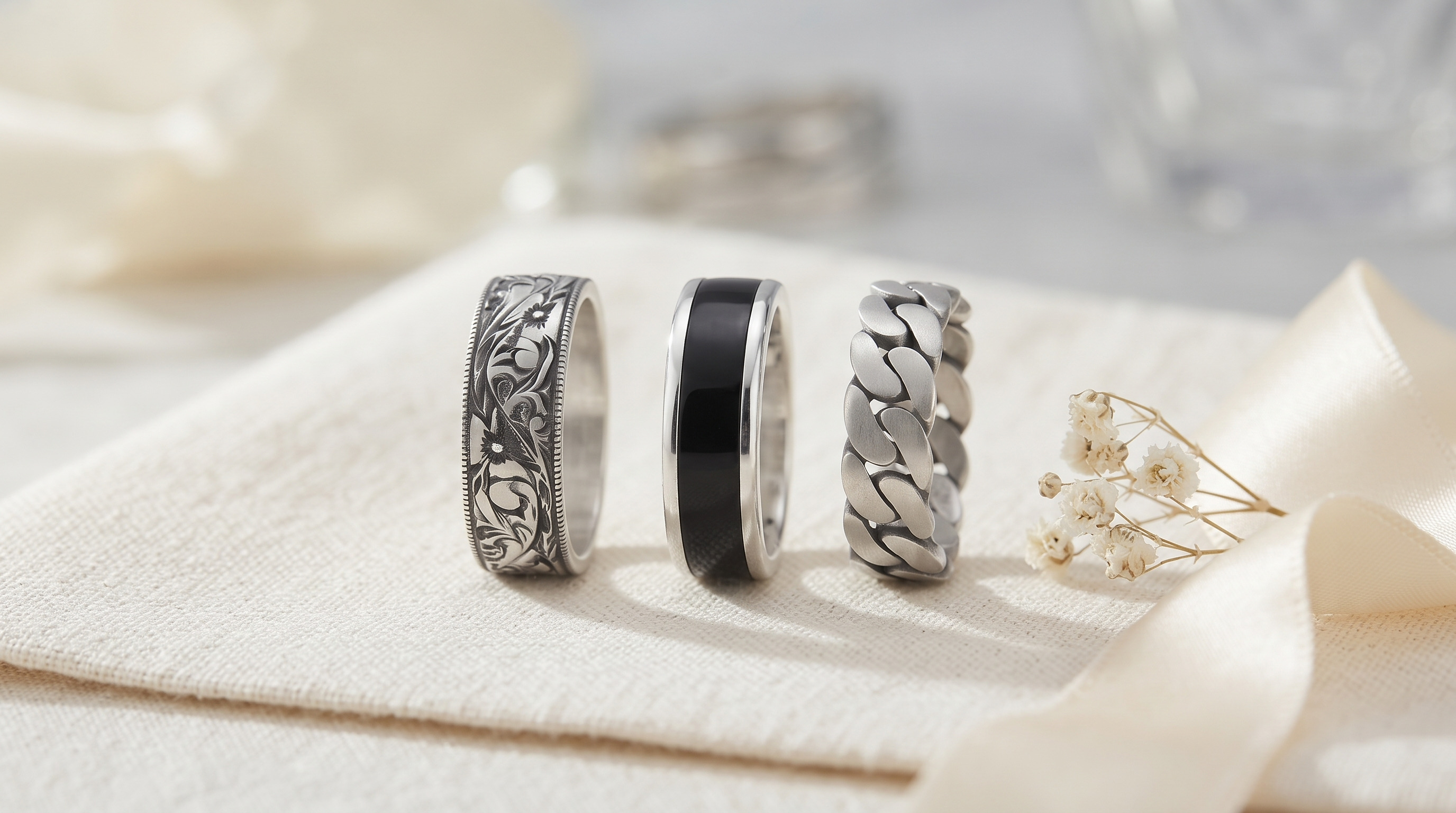
- Oxidised details: many engraved men's rings are darkened on purpose so the pattern stands out. Strong cleaners remove that darkening and flatten the design.
| Stone or finish | Why it matters | How to clean it |
|---|---|---|
| Onyx, agate, tiger eye, cubic zirconia | Hard, low porosity | Warm water, mild soap, soft brush; dry well |
| Turquoise, lapis lazuli, malachite | Soft or porous | Dry or barely damp cloth only; no soaking, no silver dip |
| Mother of pearl, pearl, howlite, lava stone | Soft and porous | Dry cloth only; keep away from perfume and water |
| Engraved or oxidised silver | Darkened on purpose | Silver cloth on raised areas only; never dip |
Method 1: a silver polishing cloth (light tarnish)
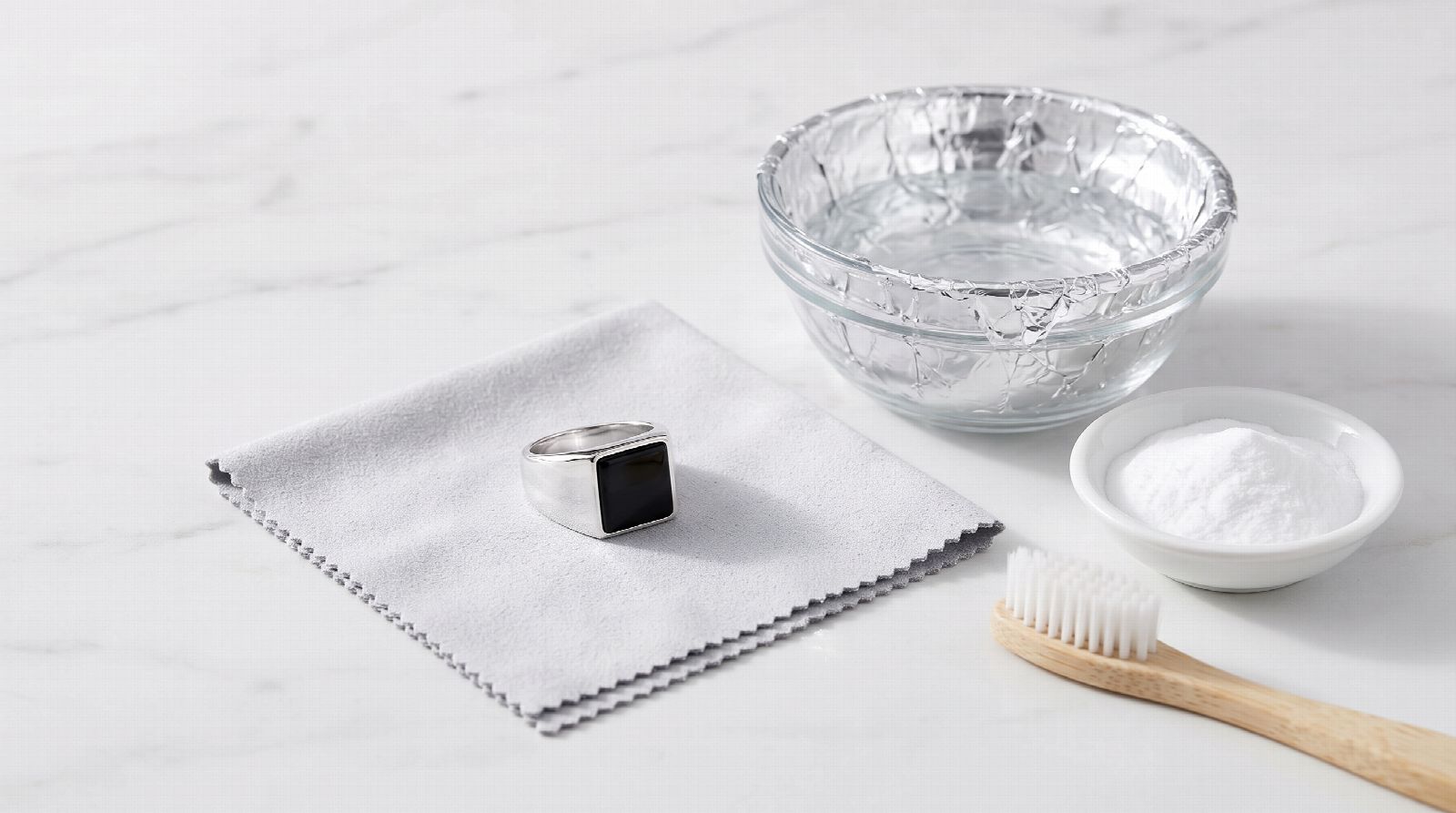
This is the first thing to try and often the only thing you need. Rub the silver with a polishing cloth using gentle back-and-forth strokes; the cloth will turn dark as it lifts the tarnish. On engraved pieces, polish only the raised surfaces so the darkened recesses keep their contrast. Use a fresh part of the cloth as it darkens.
Method 2: warm water and mild soap (everyday dirt)
- Fill a bowl with warm water and add a drop of mild, fragrance-free washing-up liquid.
- Soak plain silver for a few minutes; for pieces with hard stones, dip briefly instead of soaking.
- Clean gently with a very soft toothbrush, especially around settings and chain links.
- Rinse in clean water and dry completely with a soft cloth. Trapped moisture speeds up tarnish.
A ready-made care routine
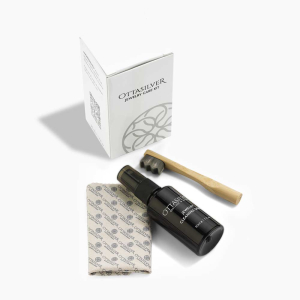
If you would rather have everything in one place, our Jewelry Care Kit brings together a silver shine cleaning spray, a precision detail brush for settings, chain links and engraving, and a soft-touch swab for finishing. Use the spray on plain silver and hard stones such as onyx, agate and tiger eye; for turquoise, lapis lazuli, malachite and mother of pearl, stay with a soft dry cloth as described above.
Care and storage


Method 3: baking soda paste (stubborn spots)
Mix a little baking soda with water into a thin paste, apply it with your fingers or a soft cloth, rub very gently, then rinse and dry. Baking soda is mildly abrasive, so use it sparingly and only on plain silver; it can dull a high polish if overused.
Method 4: baking soda and aluminium foil (heavy tarnish)
This method reverses tarnish chemically rather than rubbing it away, so it is gentle on the metal itself:
- Line a heat-proof bowl with aluminium foil, shiny side up.
- Add a tablespoon of baking soda and a pinch of salt, then pour in hot (not boiling) water.
- Place the silver on the foil so it touches it, and leave for a few minutes. The tarnish transfers to the foil.
- Remove with tongs, rinse and dry thoroughly.
Use this only on plain sterling silver with no stones and no oxidised finish: it will remove the dark detailing from engraved pieces, and the heat and salt can harm stones and glued settings.
What about silver dips and toothpaste?
- Silver dips work in seconds, but they strip oxidised finishes and can damage porous stones. If you use one, keep it to plain silver, dip very briefly and rinse well.
- Toothpaste is often recommended, but most toothpastes are abrasive enough to leave fine scratches on silver. A polishing cloth does the same job without the risk.
- Avoid bleach, chlorine, acetone and ultrasonic cleaners on jewellery with stones.
How to keep silver from tarnishing
- Wear it often: regular contact with skin keeps silver polished.
- Put it on last, take it off first: let perfume, cologne and lotion dry first, and remove silver before swimming, showering, the gym and cleaning.
- Store it dry and airtight: a closed pouch, a zip bag or a lined jewellery case, ideally with an anti-tarnish strip or a silica gel packet. Avoid storing silver in the bathroom.
- Keep pieces apart: separate compartments stop chains tangling and stones scratching each other.
- Wipe after wearing: a quick wipe removes sweat and oils before they have time to react.
For why silver tarnishes in the first place, read Is sterling silver real silver?
Caring for beaded bracelets and gold-finished pieces
Our beaded bracelets are strung on a stainless steel chain, so there is no cord to stretch, but the stones still dislike water: wipe them with a dry cloth rather than washing them. Gold-plated and gold vermeil pieces have a thin layer of gold over silver, so clean them only with mild soapy water and a soft cloth, and never with a polishing cloth or abrasive paste, which can wear the gold away.
Frequently asked questions
How often should I clean sterling silver?
Wipe it after wearing and give it a gentle clean whenever it looks dull. Pieces worn daily usually need a deeper clean only every few months.
Can I clean silver with baking soda?
Yes, on plain silver. Use it as a gentle paste, or with aluminium foil and hot water for heavy tarnish, but keep it away from stones and oxidised details.
Why does my silver ring turn black so quickly?
Sweat, humidity, perfume, chlorine and some foods speed up tarnish. Storing silver dry and removing it for swimming and showers makes a big difference.
Can I use a jewellery cleaner on rings with stones?
Only if the product says it is safe for that stone. For turquoise, lapis, malachite and pearl, stick to a soft dry cloth.