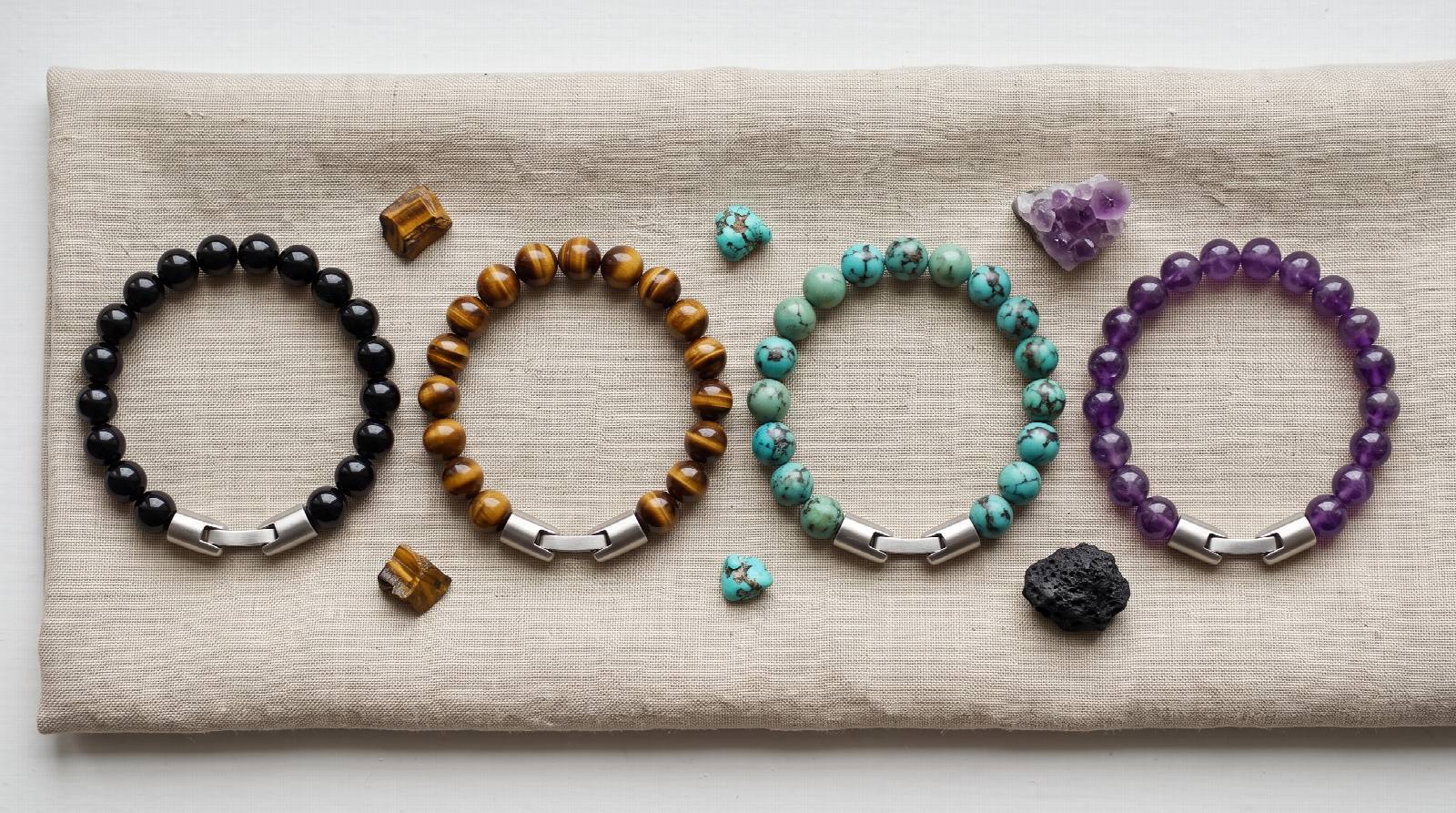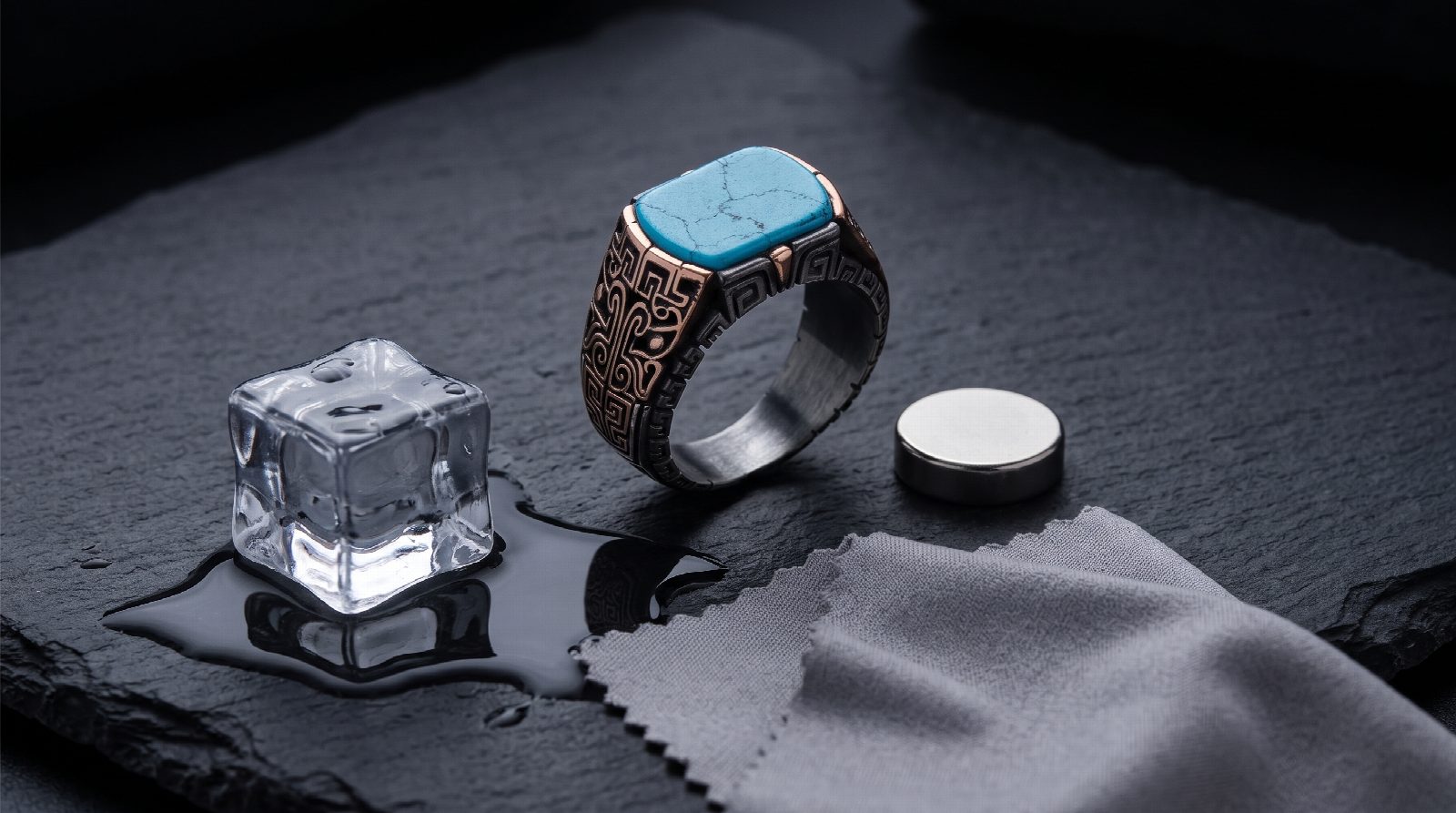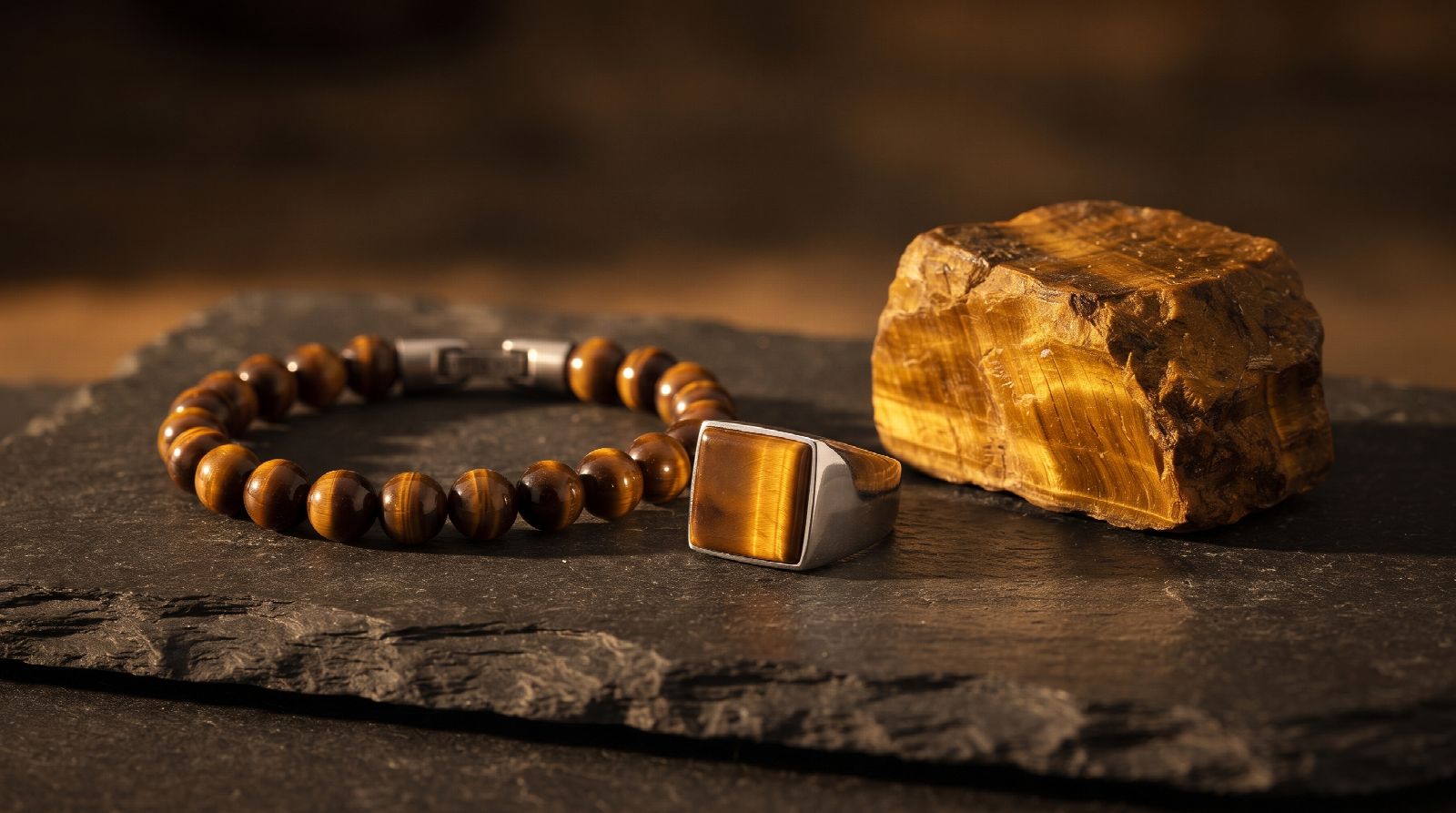
Few stones have been treasured for as long as turquoise. Its sky-blue to green colour has decorated Egyptian royalty, Persian palaces and Native American jewellery, and today it is one of the most popular stones in men's silver rings. This guide covers what turquoise means, why it is December's birthstone, how to tell real turquoise from imitations, and how to look after it.
What is turquoise?
Turquoise is a mineral made of copper, aluminium and phosphorus. Copper gives it its blue colour and iron pushes it towards green, which is why no two stones are quite the same. Many stones carry a web of darker veins, called matrix, left by the rock the turquoise formed in; some buyers prefer clean blue stones, others seek out a strong matrix pattern.
Turquoise is relatively soft, around 5 to 6 on the Mohs scale, and slightly porous. That affects how it is treated and how it should be worn, which we come back to below.
Why it is called "turquoise"
The name comes from the old French pierre turquoise, meaning "Turkish stone". Turquoise mined in Persia reached Europe through the markets and trade routes of the Turkish lands, and Europeans named it after the place they bought it from. For a jewellery house rooted in Turkish craftsmanship, it is a stone with a particularly long story.
Turquoise meaning
Across cultures, turquoise has been worn as a protective and lucky stone. It appears in the burial mask of Tutankhamun, it was set into Persian palaces and weapons, and it has been central to the jewellery of the American Southwest for centuries. Today it is most often associated with:
- Protection: a talisman against bad luck, historically worn by travellers and riders.
- Good fortune and success.
- Friendship and loyalty: turquoise has long been given as a gift between friends.
- Calm communication: its colour is associated with clear, honest expression.
These meanings come from tradition and folklore rather than science, and they are part of turquoise's appeal rather than a promise.
Turquoise: December's birthstone
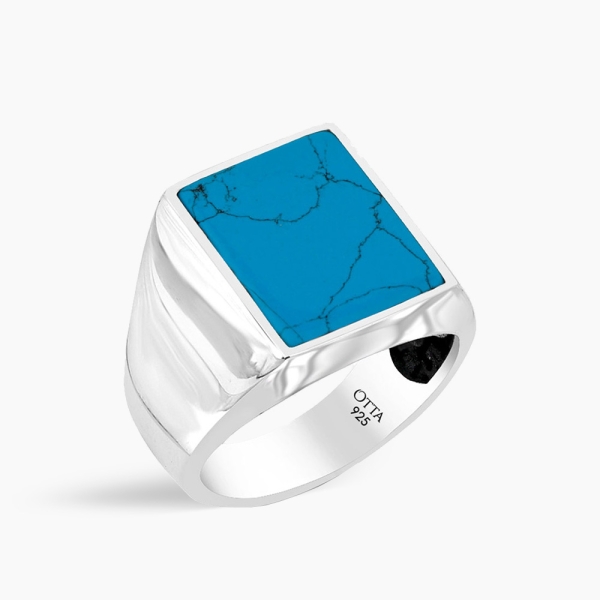
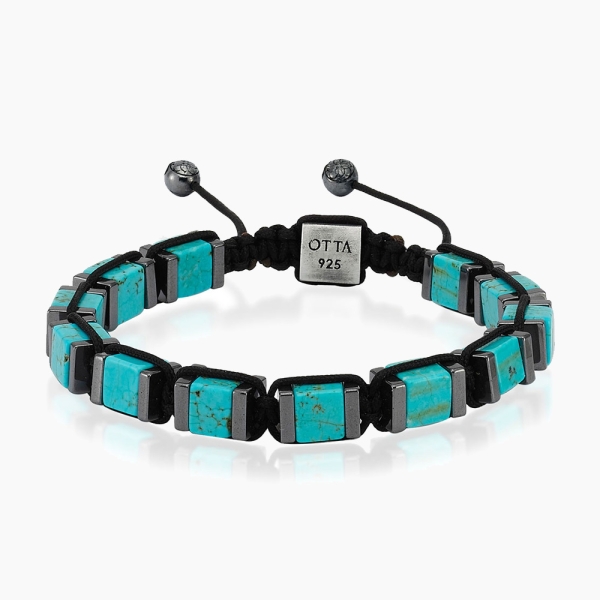
Turquoise is one of the birthstones for December, alongside tanzanite and zircon, and it is the traditional choice of the three. Its winter-sky blue makes a turquoise ring or bracelet an easy birthday gift for a man born in December. Our birthstone bracelets cover every month.
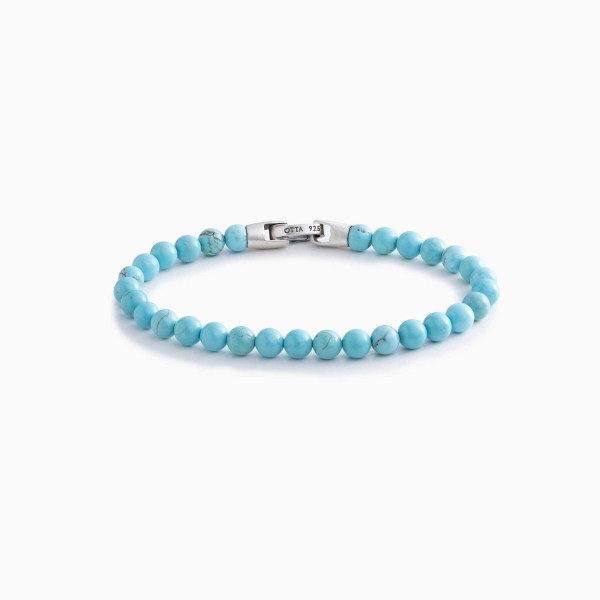
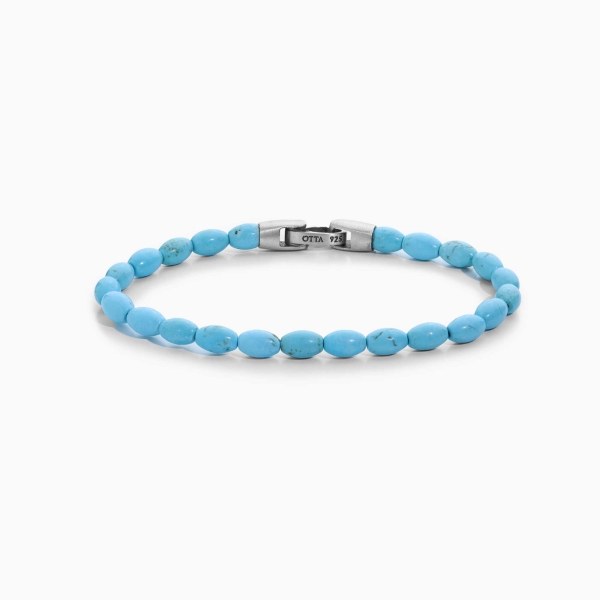
Turquoise bracelets and a classic ring
Natural, stabilised or imitation?
Understanding how turquoise is treated is the key to buying it well:
- Natural turquoise is cut and polished with no treatment. Hard, high-quality natural stones are rare and command a premium.
- Stabilised turquoise is natural turquoise impregnated with a clear resin that hardens the stone and deepens its colour. Most turquoise on the market is stabilised; it is real turquoise and wears better than soft natural material.
- Reconstituted turquoise is made from turquoise powder bonded with resin into blocks.
- Imitations are other materials made to look like turquoise, most often dyed howlite or magnesite, sometimes glass or plastic.
- "African turquoise" is a trade name for a green jasper. It is a genuine, attractive stone in its own right, but it is not turquoise.
How to tell if turquoise is real
- Look into the veins: on dyed imitations, colour often gathers darker in cracks and along the veins, while the rest of the stone looks unnaturally even.
- Check the colour: real turquoise varies slightly across the surface. A flawless, uniform "crayon" blue on a low-priced piece is a warning sign.
- Feel it: stone feels cool at first touch and heavier than plastic.
- Ask about treatment: a reputable seller can tell you whether turquoise is natural, stabilised or reconstituted.
- For certainty, use a lab: a gemmological lab can confirm the material and any treatment. Avoid "hot needle" or scratch tests at home, which can damage a genuine stone.
Can turquoise get wet?
A splash will not hurt it, but turquoise is porous and should not be soaked. Water, soap, sweat, oils and perfume can slowly change its colour, especially on untreated stones. Take a turquoise ring off before washing your hands, showering or swimming, put it on after lotion and cologne, and wipe it with a soft dry cloth. Keep it out of prolonged direct sunlight and away from heat.
Wearing turquoise as a man
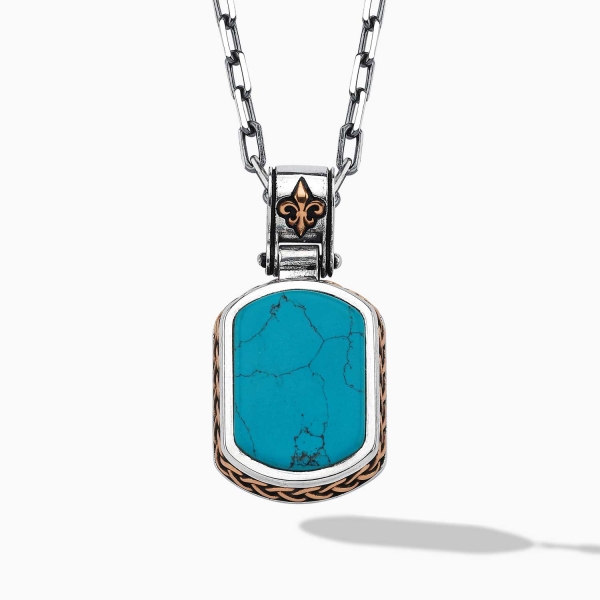
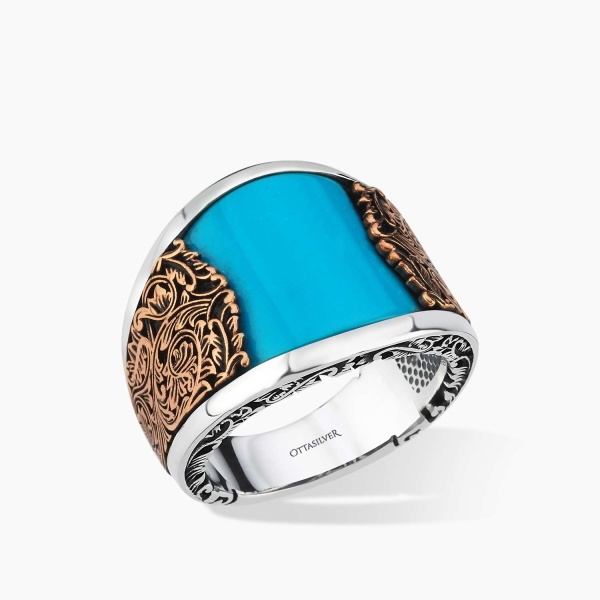
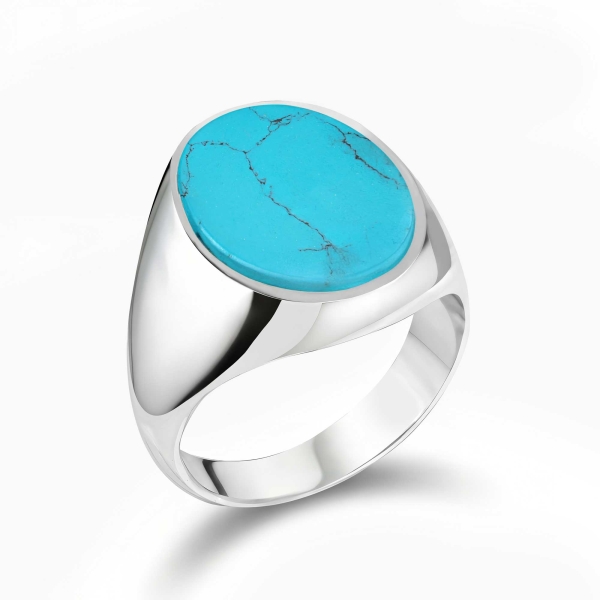
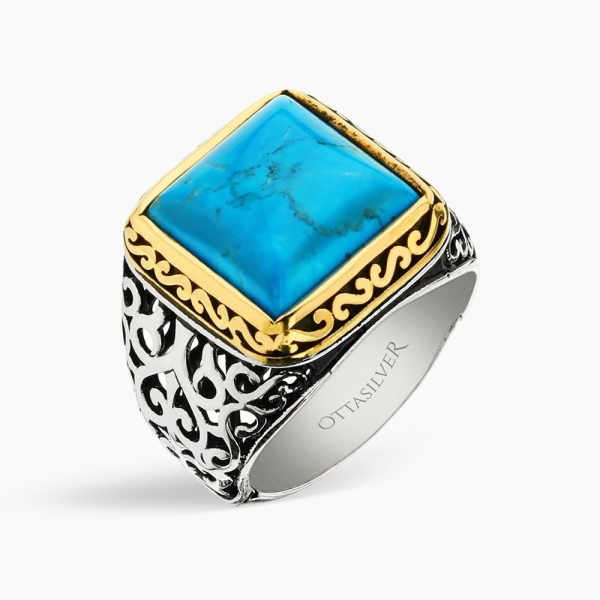
Turquoise and sterling silver are a classic pair: the cool metal makes the blue look brighter. A turquoise ring works as an everyday statement with denim, linen and earthy colours, and a turquoise bead bracelet is a gentler way to add colour. If you like bolder pieces, look for engraved silver shoulders around the stone, a style with deep roots in Ottoman and Persian jewellery.
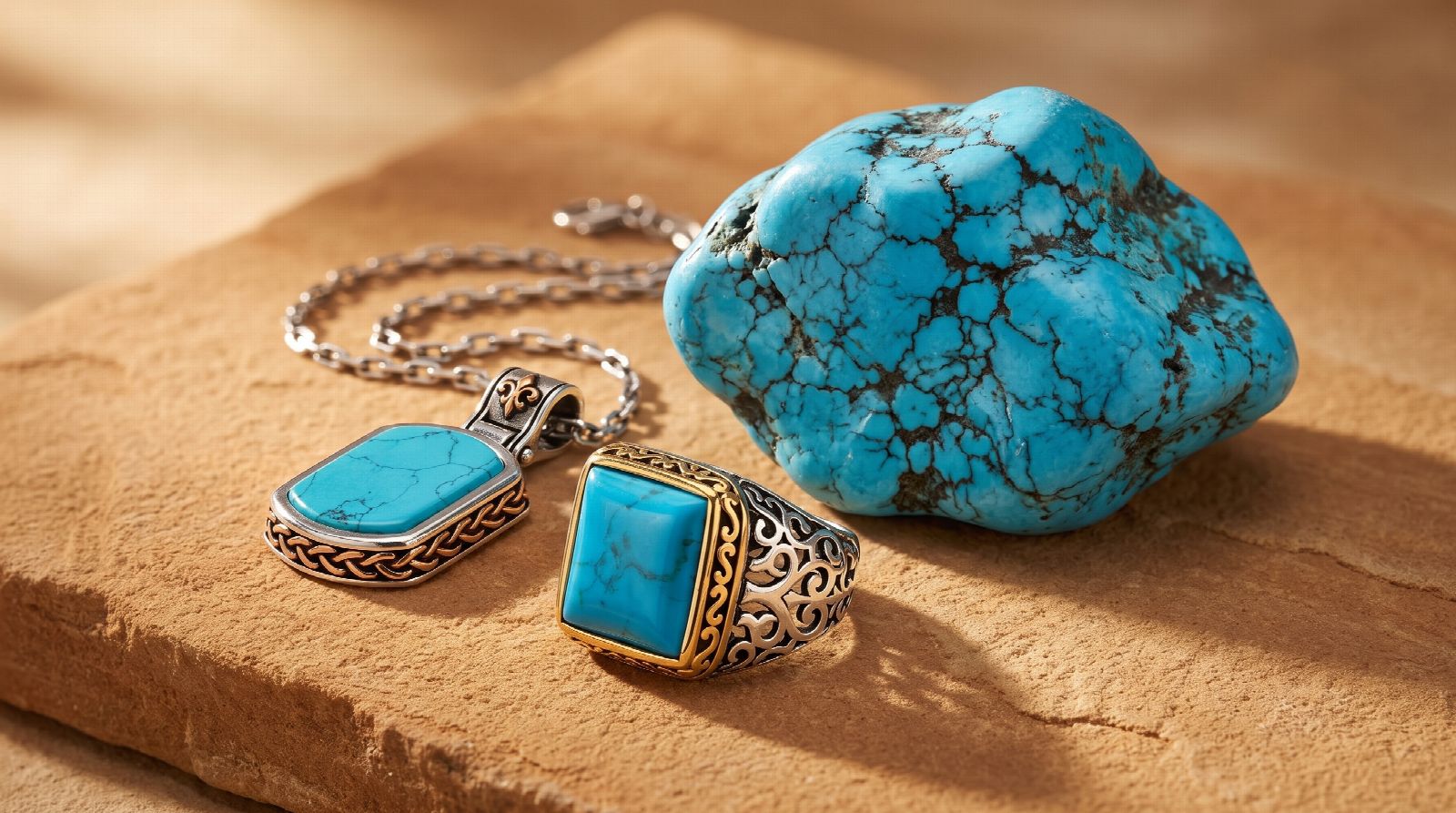
Turquoise rings and pendant
Frequently asked questions
What does turquoise symbolise?
Traditionally protection, good fortune, friendship and calm, honest communication.
What month is turquoise the birthstone for?
December, together with tanzanite and zircon.
Is stabilised turquoise real?
Yes. It is genuine turquoise that has been strengthened with resin, a common and accepted treatment.
Why does turquoise change colour?
Because it is porous, it can absorb oils, sweat and chemicals over time, which can shift it towards green. Keeping it clean and dry slows this down.