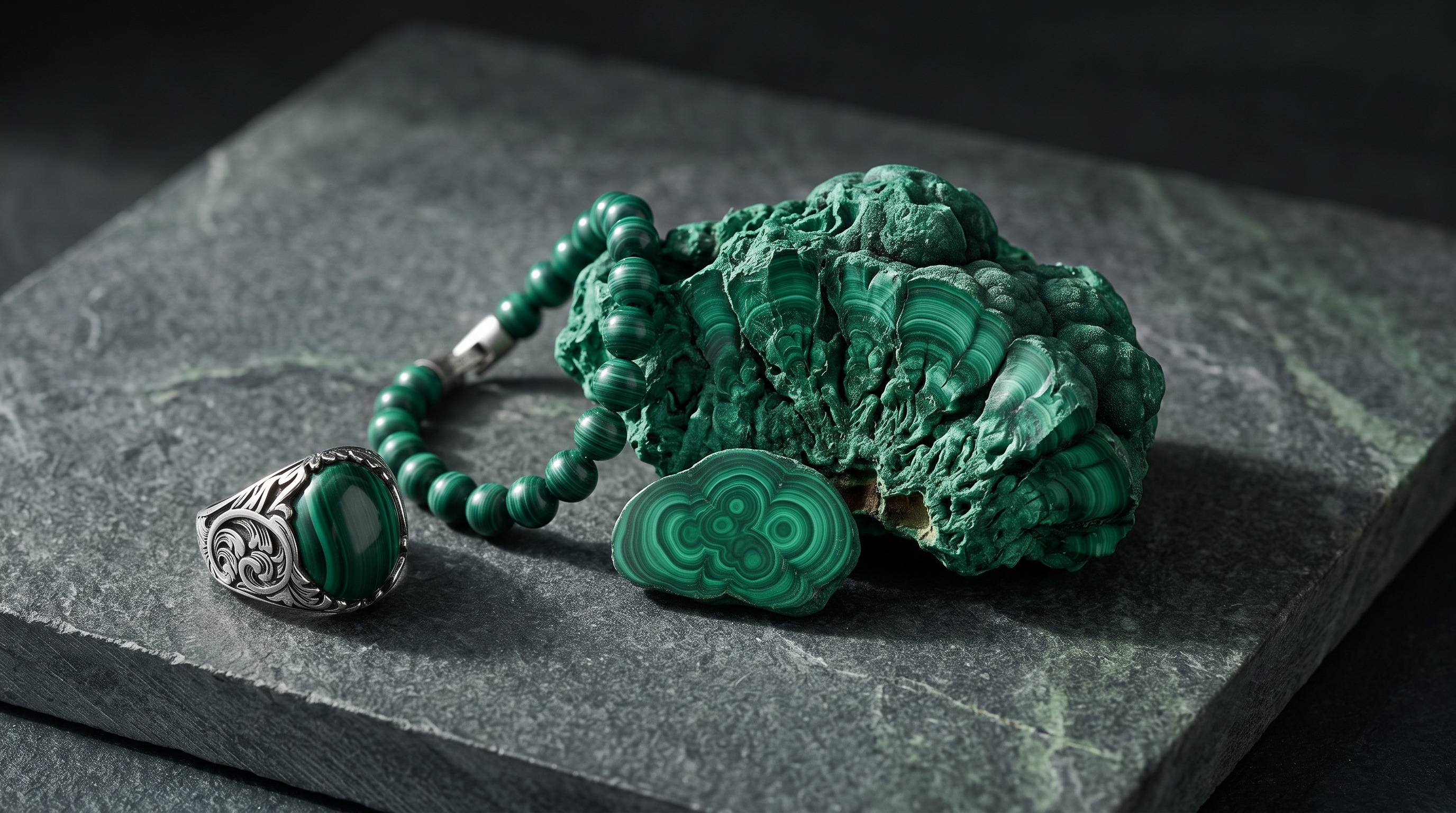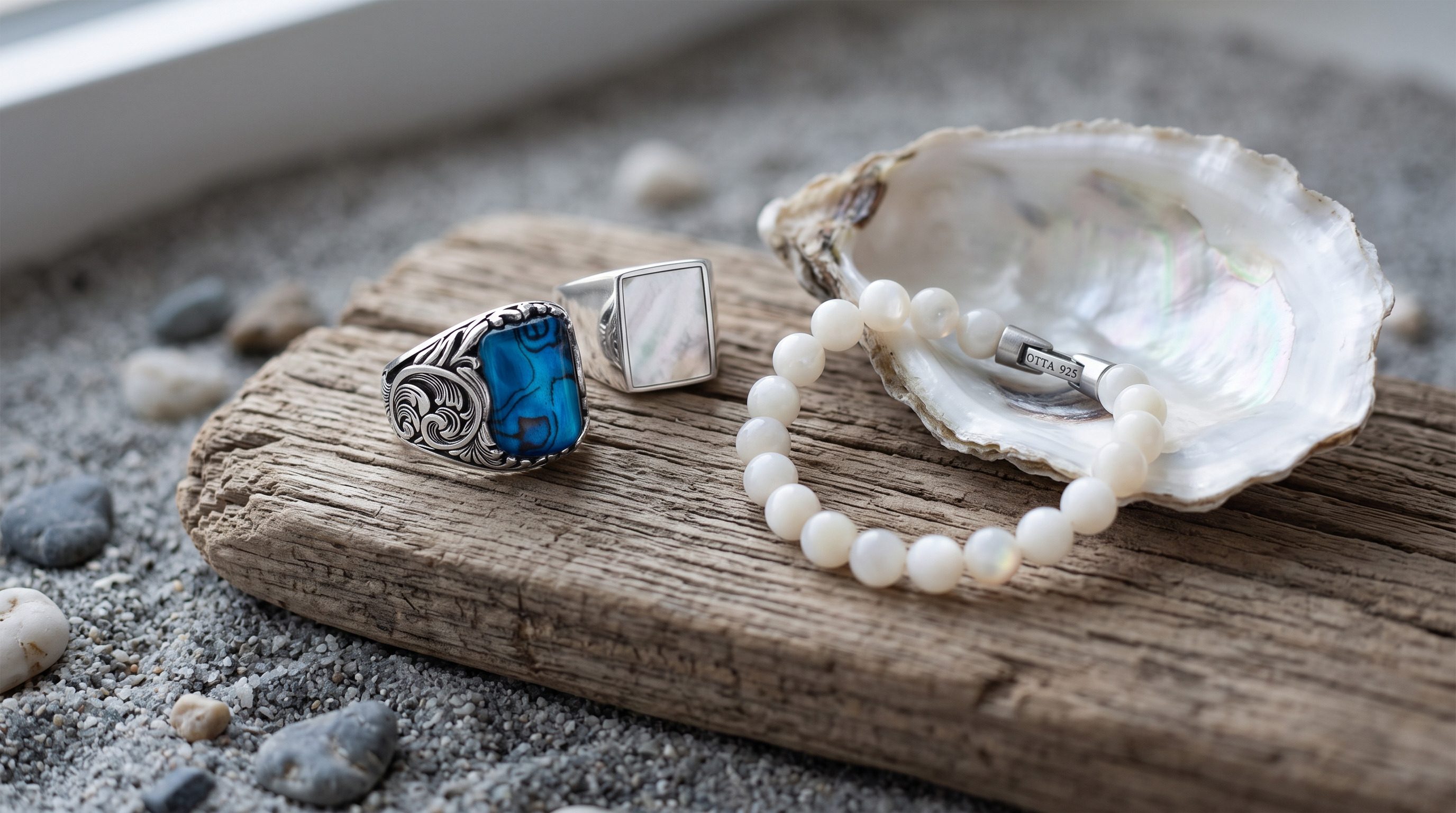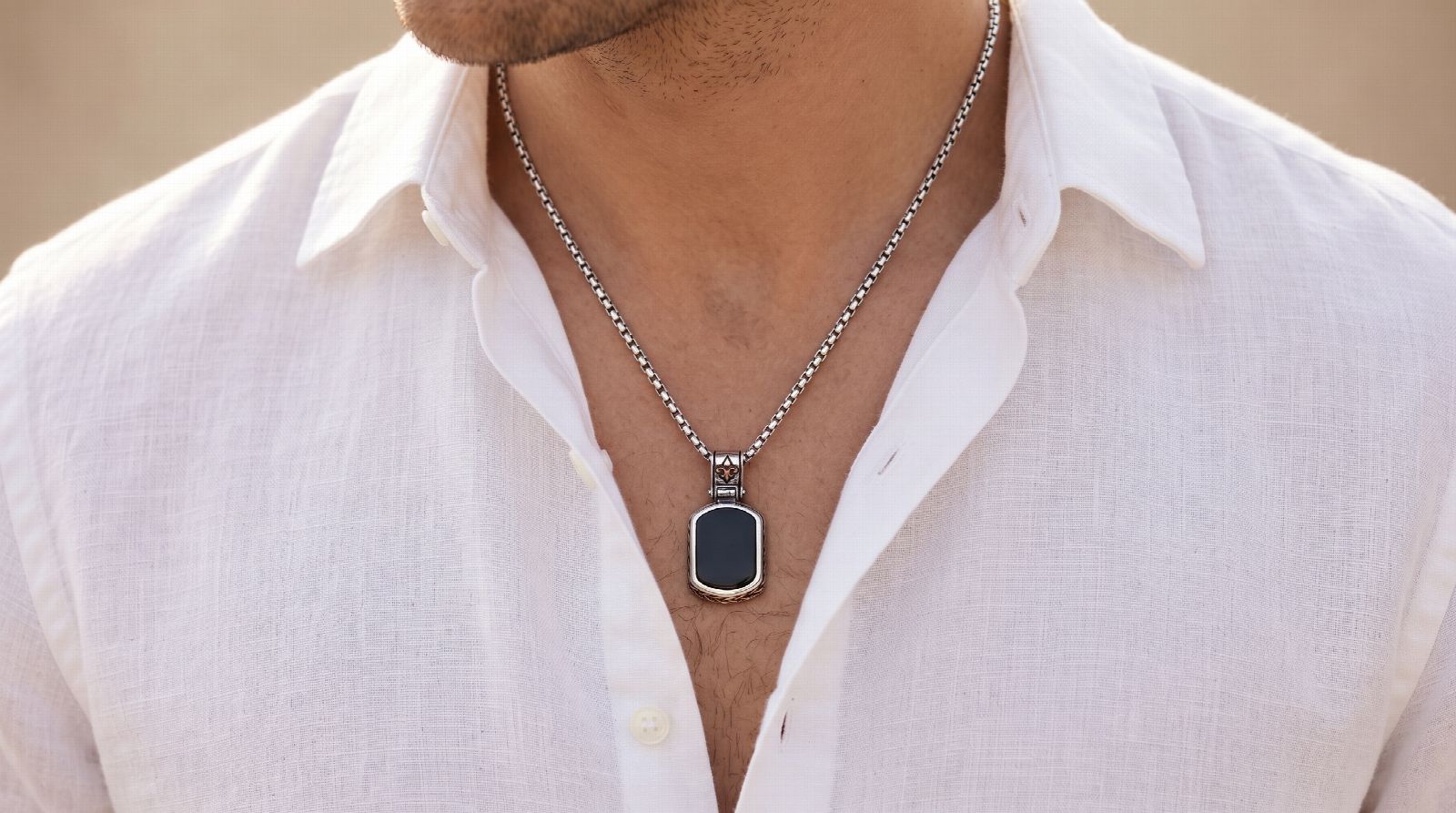
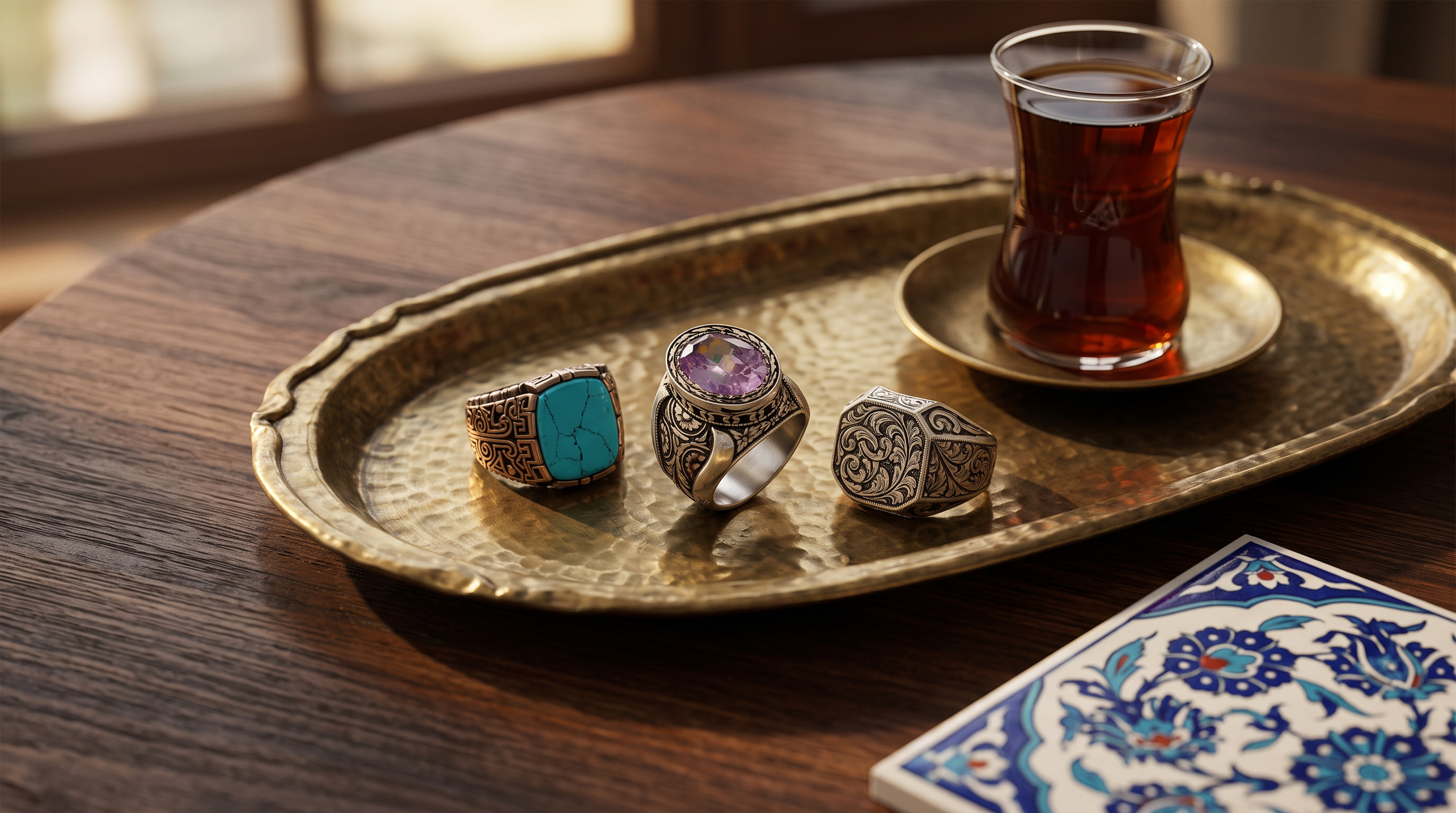
A heavy silver ring with a deep-cut floral pattern, a stone the colour of the sea and a band blackened in the grooves: for many people that is what Turkish jewelry looks like, and it has a history that goes back more than five hundred years. This guide explains where Turkish jewelry comes from, the techniques and motifs that define it, the stones it favours, and how to make sure the Turkish silver you buy is the real thing.
A short history: from the Ottoman court to the Grand Bazaar
At the height of the Ottoman Empire, the palace in Istanbul kept its own community of master craftsmen, the Ehl-i Hiref, or "people of talent". Goldsmiths, silversmiths, gem setters and engravers worked for the court alongside calligraphers and tile painters, and the patterns they developed spread from the palace to the city's workshops.
Many of those workshops sat in and around the Grand Bazaar (Kapalıçarşı). Built soon after the conquest of Constantinople in 1453 and expanded over the following centuries, it is one of the oldest and largest covered markets in the world, with around 60 streets and some 4,000 shops. Jewellers have traded there for generations, and the bazaar is still a centre of the gold and silver trade in Turkey.
The signet ring: a Turkish classic
In the Ottoman world a man's seal was his signature. Officials, merchants and scholars pressed a signet ring, carved with their name by a specialist seal engraver (hakkak), into ink or wax to sign documents, and the sultan's own monogram, the tughra, was a work of art in itself. That is one reason bold signet rings, often with a flat stone or an engraved face, remain the most recognisable Turkish men's rings today.
Techniques that define Turkish silver
- Hand engraving: patterns cut into the silver with small chisels, then blackened (oxidised) in the grooves so the design stands out against polished high points.
- Filigree (telkari): fine silver wire twisted and soldered into lace-like patterns, a speciality of Midyat and Beypazarı.
- Niello (savat): a black metallic alloy fused into engraved silver, traditionally associated with Van.
- Knitted chain (Trabzon hasırı): silver wire woven by hand into a flexible mesh, the famous craft of Trabzon on the Black Sea.
- Repoussé: patterns raised by hammering the metal from the back.
In our own shop, about one in five rings sold over the past year was hand engraved, and engraved designs with turquoise, onyx and blue mother of pearl are among our best sellers.
Motifs you will see
- Floral scrolls: the flowing leaf-and-flower patterns of Ottoman ornament, known as rumi and hatayi.
- The tulip: a favourite Ottoman symbol, so loved that an early eighteenth-century period is known as the Tulip Era.
- Crescent and star: an emblem of the empire that survives on the Turkish flag.
- Geometric bands: interlocking lines and key patterns, often combined with a coloured stone.
Our Sultan collection brings these ideas together in large, hand-engraved rings set with a single statement stone.
Stones in Turkish jewelry
- Turquoise: the name itself comes from the old French for "Turkish stone", because it reached Europe through Ottoman trade routes. See our turquoise guide and turquoise rings.
- Agate (akik): especially red and Yemeni agate, treasured in Islamic tradition. Browse agate rings.
- Black onyx: the classic stone for a strong, simple signet. See what black onyx means.
- Oltu stone: a black stone from Erzurum in eastern Turkey, carved into prayer beads and ring stones.
- Mother of pearl: used for centuries in Ottoman inlay work; read more in our mother of pearl guide.
Iconic pieces
The evil eye (nazar)
The blue glass nazar boncuğu is believed to ward off the envious gaze. It is traditionally made by glassmakers near Izmir, and it appears on bracelets, necklaces and doorways across Turkey. Our evil eye silver necklace puts the charm in sterling silver.
The Turkish puzzle ring
A puzzle ring is made of several interlocking bands that fall apart when removed and must be reassembled to be worn. A popular legend says a sultan gave one to his wife so he would know if she had taken it off; it is a story, not history, but puzzle rings remain a favourite souvenir from Turkish markets.
Our favourite Turkish-inspired rings
These rings bring hand engraving, oxidised detail and traditional stones together in 925 sterling silver. See the full range of Turkish jewelry.
Turkish-inspired rings


How to buy real Turkish silver
- Look for the 925 stamp: sterling silver is 92.5 per cent silver and is usually stamped 925 inside the band.
- Beware of "alpaca": in tourist markets, "Turkish silver" is sometimes alpaka, a copper, nickel and zinc alloy also called nickel silver. It contains no silver.
- Ask for the weight and the stone: a serious seller can tell you the silver weight and whether the stone is natural, treated or lab-created.
- Test at home: real silver is not magnetic and turns a white cloth grey when polished. Our guide to telling if sterling silver is real walks through every test.
Caring for engraved and oxidised silver
The black in the grooves of an engraved ring is intentional: it is oxidation applied by the silversmith to give the pattern depth. Clean the ring with mild soapy water and a soft brush, and polish only the raised surfaces with a cloth. Avoid silver dip and long baking soda baths, which can strip the oxidised finish. For more, see our guide to cleaning sterling silver.
Frequently asked questions
Is Turkish silver real silver?
Turkish sterling silver is real silver, 92.5 per cent pure, and is stamped 925. Be careful with anything sold as "Turkish silver" without a stamp, which may be alpaca (nickel silver).
Why are Turkish rings so big?
Bold signets come from the Ottoman seal-ring tradition, where the ring face had to be large enough to carry a name or monogram.
What does the black colour in Turkish rings mean?
It is deliberate oxidation that darkens the engraved grooves so the pattern stands out. It is not tarnish.
What stones are traditional in Turkish men's rings?
Turquoise, agate, black onyx, oltu stone and, in larger statement rings, amethyst and other coloured stones.